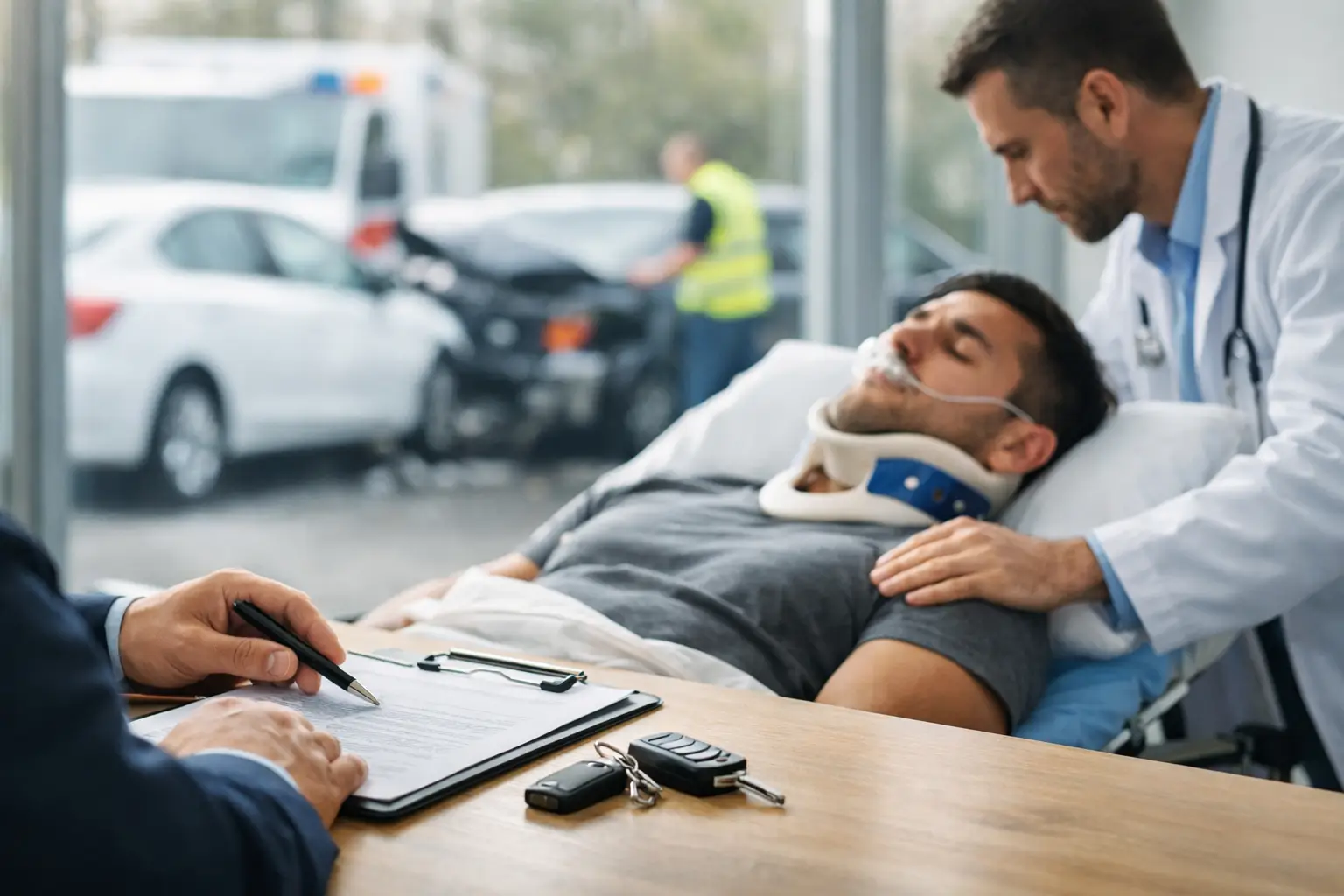
You get in the car, you have a crash and, suddenly, what matters is no longer the vehicle. The first thing is the pain, the ambulance, the emergency room and a question that keeps you up at night: who pays medical expenses for a car accident. The short answer is that it depends on the state, on the available insurance and on who was at fault. The useful answer, the one that truly protects your pocket and your case, requires looking a bit more closely.
After an accident, many Hispanic families in the United States make the same mistake: assuming that the other driver's insurer will pay everything immediately. Sometimes it happens, but many times it doesn't. While they discuss responsibility, medical bills keep arriving. That's why it's important to understand from day one what coverage might come into play, what documents to keep and when to seek legal help in Spanish.
Who pays medical expenses for a car accident in the US
There is no single rule for the entire country. In some states, a system called no-fault works, where your own health insurance or auto insurance can cover part of your expenses first, without waiting for it to be determined who caused the crash. In other states, the responsible driver and their insurer are the ones who should answer for your injuries.
On top of that, there's another important detail: a single policy doesn't always pay for everything. It's common for several coverages to come into play at different times. First, immediate medical protection may pay, then your health insurance, and later there may be a reimbursement or a claim against the at-fault driver's insurer.
What changes the picture is the severity of the injury, the type of coverage purchased and the laws of the state where the accident occurred. California doesn't handle these cases the same way as New York or New Jersey. That's why a quick and well-informed answer can prevent you from accepting less than you need for treatment.
The coverages that usually pay first
The first source of payment can be your own auto policy. Some policies include MedPay or PIP, which help with immediate medical expenses after the accident. These coverages usually activate quickly and can help with ambulance, emergency room, consultations, X-rays, rehabilitation and other related treatments.
MedPay normally covers medical expenses up to the contracted limit, without getting into the fault debate. PIP, depending on the state, can go further and include part of lost wages and essential expenses. The problem is that its limits don't always reach if the injury is serious. A fracture, surgery or weeks of physical therapy can exceed that amount very quickly.
If you don't have that coverage or if it runs out, your health insurance may come in. Here there is some relief, but also nuances. Your health insurer can cover treatment, but later may claim reimbursement if you later receive compensation from the person responsible for the accident. That issue is called subrogation or right of reimbursement, and it's good to review it carefully before signing anything.
When the other driver was at fault, their liability insurance should respond for your medical expenses, pain, future treatment and other damages. The problem is that payment usually doesn't come quickly. First, the insurer wants to investigate, review records and, often, downplay the injury. That's where a wrong move can complicate your life.
What happens if the other driver has no insurance
It happens more often than you'd think. If the person who caused the accident has no insurance, or has very little coverage, there may still be options. Many policies include protection against uninsured or underinsured drivers. That coverage can make the difference between being left with medical debt or having a real way to claim.
There can also be third-party liability in specific situations. For example, if the accident involved a company vehicle, a commercial truck or a driver who was working at that time, the claim can go beyond a simple individual policy. In those cases, checking carefully who is liable is key because serious injuries usually require expensive and prolonged treatments.
If you were a passenger, pedestrian or in a rideshare
You don't have to be the driver to have the right to coverage. If you were a passenger, pedestrian or even a cyclist, the insurance of the vehicle that hit you, the car you were traveling in, or your own coverage may apply, depending on the case. In accidents with Uber or Lyft, there are also special rules and policies that depend on whether the driver was waiting for a ride, going to pick someone up or transporting the passenger.
That detail matters a lot because companies and insurers review every minute of the trip to decide which policy to use. If you were injured in such a situation, it's not wise to guess or rely on them calling to resolve it on their own.
What medical bills can be claimed
When a claim is well-structured, it's not limited to the hospital bill from the first day. The ambulance, emergency room, specialists, diagnostic tests, medications, physical therapy, chiropractor when appropriate, surgery, future care and, in some cases, psychological support if the accident left emotional scars can all be included.
The reasonable cost of future treatment can also be claimed if the injury doesn't resolve quickly. This is very important in neck, back, knee injuries or traumas that seem minor at first but worsen over time. Many people try to tough it out for fear of the bill, and then the insurer uses that delay to say they weren't that injured. Seeking medical attention soon protects your health and also protects your case.
Mistakes that make you end up paying more
The most common mistake is not receiving medical attention or delaying it too much. The second is talking to the other driver's insurer as if they were on your side. It may sound nice, but their goal is to close the case paying as little as possible. If you say you're fine, if you accept a quick amount or if you give a recorded statement without guidance, you can weaken your claim.
Another serious mistake is not keeping evidence. Medical reports, prescriptions, bills, photos of the accident, police report and days of work lost help prove how much the crash affected you. Without that foundation, even a clear case can lose strength.
And there's a point that worries many Hispanic families: thinking that because of their immigration status they can't claim. That stops too many people. Your rights for an injury don't disappear because of your status. If you suffered an accident, you deserve to know what options you have and to talk to someone who explains everything to you in Spanish, without beating around the bush.
When it's worth talking to a lawyer
If the injuries are mild and medical coverage is working without conflict, perhaps the process is simpler. But when there is persistent pain, hospitalization, multiple insurers involved, debate about fault or bills that exceed available limits, talking to a lawyer stops being a luxury and becomes basic protection.
A lawyer can identify which policies should respond, prevent the insurer from pressuring you prematurely and calculate damages that many people don't claim out of ignorance. They can also coordinate the handling of medical bills while the case progresses, something especially important if you can't work or if treatment is still ongoing.
On a platform like Conexión Legal, the value is in speeding up access to clear help in Spanish, especially when time is running out and insurance company calls won't wait.
What to do right now if you had an accident
If you're in this situation, don't complicate your life trying to solve it alone while in pain and stress. Get treated, follow medical instructions, keep every document and avoid accepting quick settlements without understanding what rights you're leaving on the table. If you've already received bills or if the insurer is confusing you, move as soon as you can.
The question is not just who pays medical expenses for a car accident. The underlying question is how to prevent the accident from sinking you economically while you try to recover. The sooner you understand what coverage applies and who should respond, the more chances you'll have to protect your health, your job and your family's stability.
If something isn't clear, ask for help right away. After a crash, waiting rarely makes things better. Acting on time does.