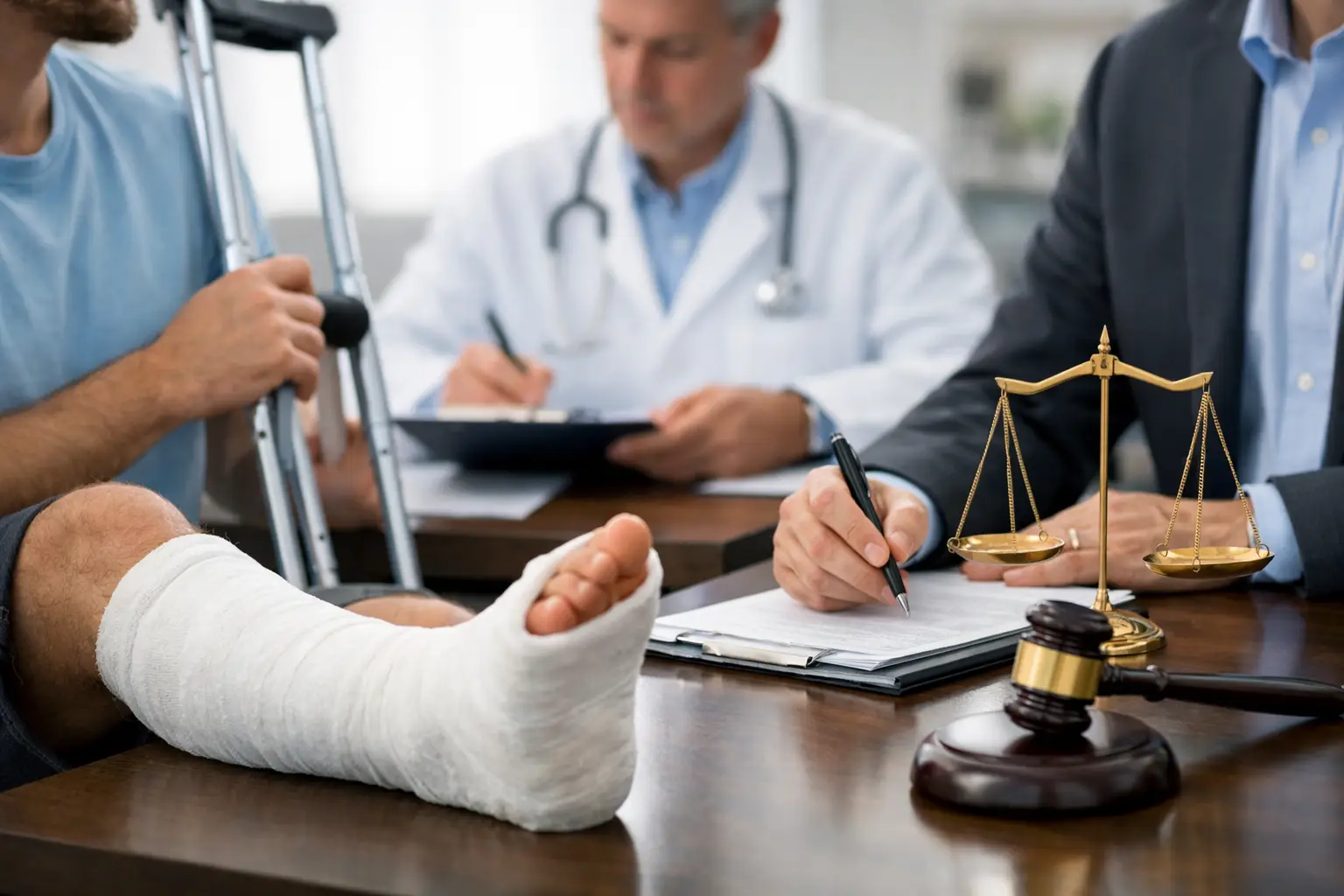
A crash can last seconds, but its consequences can follow you for months: pain that appears the next day, medical bills, days unable to work, and persistent calls from an insurance company. Knowing your rights after a crash in the United States helps you protect yourself before someone else decides for you how much your health or peace of mind is worth.
It doesn't matter if you were a driver, passenger, pedestrian, or cyclist. You also shouldn't assume that because you don't have insurance, speak little English, or because of your immigration status, you have no right to ask for help. Your situation deserves to be reviewed by someone who defends your interests, not those of the insurance company.
Your rights after a crash: what you need to know first
After a traffic accident, you have the right to receive medical attention, file a claim for your losses, and seek legal advice before accepting any offer. If another person caused the crash, their insurance company may be responsible for compensating you for the damages they caused.
That compensation can include current and future medical bills, money you lost by missing work, damage to your vehicle, and physical or emotional pain caused by the injury. The value of a case depends on many factors: how the accident happened, the severity of the injuries, available evidence, policy limits, and the laws of the state where it occurred.
The most urgent thing is not to let silence, fear, or pressure make you give up your rights. An insurance company may sound friendly on the phone, but their goal is to close the matter by paying as little as possible.
Get medical attention even if you feel fine at first
Adrenaline can hide pain for hours or even days. Injuries to the neck, back, head, or soft tissues don't always show up at the crash site. Waiting too long to get checked can harm your health and also give the insurance company an excuse to say your injuries are not related to the accident.
Go to the emergency room, a clinic, or your doctor as soon as possible if you have pain, dizziness, tingling, stiffness, headaches, anxiety, or any changes after the impact. Follow medical instructions and keep all documents: reports, prescriptions, bills, test results, and work leave receipts.
Don't minimize what you're feeling out of fear of missing work. Your body and your ability to support your family are too important. If the accident prevents you from working, that loss of income can be part of your claim.
What to do at the accident scene if you can do so safely
If you're still at the crash site and don't need urgent medical attention, prioritize your safety. Move to a safe area if possible, call 911, and wait for police to arrive. A police report can be relevant evidence, although it's not the only one that counts.
Exchange information with the other driver, but avoid arguing about who was at fault. Don't apologize out of politeness or make comments like "I didn't see you" or "I think it was my fault." In a moment of nervousness, it's easy to say something that could later be used against you.
Take photos and videos of the vehicles, license plates, damage, road conditions, traffic lights, signs, weather, and any visible injuries. If there were witnesses, ask for their name and phone number. It's also good to note the time, exact location, and what you remember while it's fresh.
If you couldn't collect evidence because of your injuries, it doesn't mean you've lost your case. A lawyer can investigate, request recordings from nearby cameras, locate witnesses, and review the police report. But the sooner action is taken, the more options there will be to preserve that evidence.
Don't accept money or give a recorded statement without guidance
Many people receive a call from the insurance company a few hours after the crash. They may ask for a recorded statement, access to your complete medical history, or that you accept a quick amount to "settle" the case. You are not obligated to make these decisions without understanding the consequences.
Accepting a settlement usually means signing a waiver. After that, even if you discover you need therapy, surgery, or more time off work, it can be very difficult to request additional compensation. What seems like a quick solution can leave you facing expenses you didn't yet know about.
You can communicate the basic facts of the accident to your own insurance company if your policy requires it, but be cautious with details. Don't make things up, don't exaggerate, and don't speculate. Stick to the facts. Before talking to the other party's insurance company or signing documents, seek legal consultation.
You can claim even if you share some responsibility
In many crashes, fault is not completely one person's. There may be speeding, distracted driving, a dangerous turn, a driver without lights, a road in poor condition, or multiple causes at the same time. Having a share of responsibility doesn't always eliminate your right to claim.
The rules change depending on the state. In California, Illinois, and Georgia, for example, shared liability can affect the amount you receive, but the analysis depends on the specific facts and applicable law. That's why you shouldn't give up on a case just because the other driver accused you or because the police report doesn't seem favorable at first glance.
You may also have rights if you were a passenger. An injured passenger can claim against the driver of their own vehicle, against another driver, or against both, depending on who caused the accident. You shouldn't bear the financial consequences of a crash you didn't cause.
Your immigration status doesn't define your right to ask for help
Fear of exposure causes many Hispanic families not to report accidents or claim the attention they need. But an injury doesn't disappear by ignoring it, and insurance companies shouldn't take advantage of that fear.
Your immigration status should not prevent you from consulting with a personal injury lawyer. You can ask for guidance in Spanish, explain what happened with confidence, and know your options before deciding what to do. The conversation should focus on the accident, your injuries, and the evidence, not on making you feel vulnerable.
If someone threatens you with immigration, pressures you not to call the police, or tries to convince you to settle it in cash without documentation, keep your distance. That pressure can be a sign that they want to prevent you from protecting your rights.
The time limit to act may be shorter than you think
Don't wait until you're completely recovered to seek help. States set deadlines for filing lawsuits, and some situations have special rules. If the crash involved a company vehicle, a commercial driver, a public entity, an uninsured vehicle, or a hit-and-run, requirements may change and deadlines can be especially strict.
Acting soon allows you to preserve evidence, organize your medical care, and avoid errors with the insurance company. It's not about rushing to sign anything. It's about not wasting valuable time while other people build their version of what happened.
When it's wise to talk to an accident lawyer
It's advisable to seek legal help if you've suffered injuries, if you've missed work, if the insurance company denies fault, if you're offered a quick settlement, or if the accident involved multiple vehicles. Also if the other driver was uninsured, left the scene, or was driving for a company.
An accident lawyer can review the evidence, calculate your losses, communicate with insurance companies, and defend your claim. At Conexión Legal, you can receive free guidance in Spanish and connect with a lawyer specializing in accidents in less than 24 hours. Assistance is available 24/7 and, in many cases, you don't pay fees if compensation is not recovered.
Don't complicate your life trying to negotiate while injured, worried about bills, and not knowing what to answer. Keep your documents, take care of your health, and ask for help as soon as possible. After a crash, your priority shouldn't be convincing an insurance company that your pain matters: it should be receiving the protection you need.