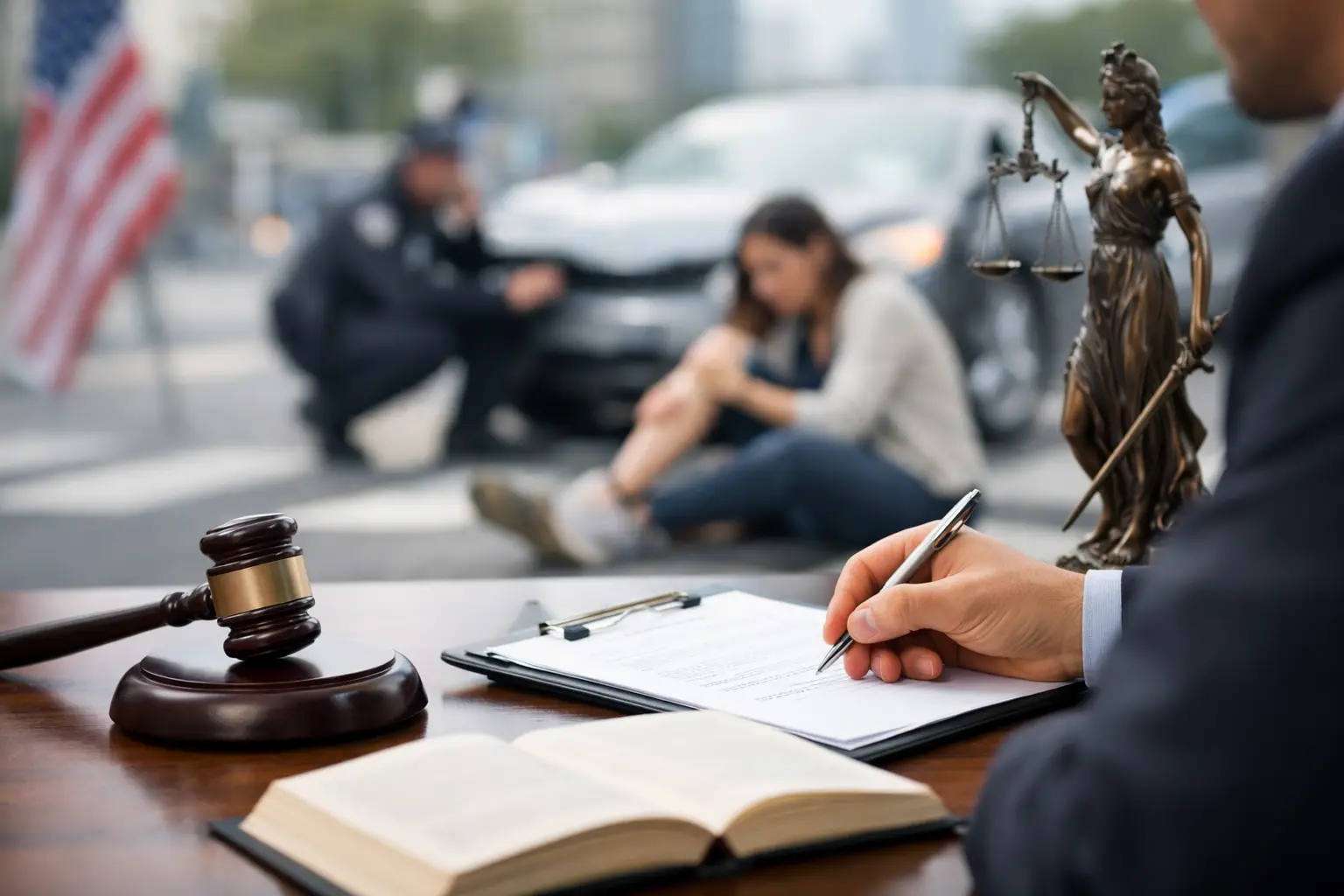
A driver turns without looking, a car runs a pedestrian crosswalk or a vehicle accelerates in a parking lot. In seconds, a pedestrian can end up injured, unable to work and receiving calls from an insurance company. This legal guide for pedestrian accidents explains what to do from the first moment to take care of your health and not lose rights that could be key to your claim.
After a hit-and-run, many people believe they can't do anything because they were crossing outside the pedestrian crossing, because they don't have health insurance or because they fear their immigration status will affect the case. Don't be left with that doubt. Each accident has its own details and, in many cases, the driver, a company, a public entity or multiple parties may be liable.
Prioritize your health and document the accident
Even if you think the impact was minor, seek medical attention as soon as possible. Adrenaline can mask pain for hours and injuries to the head, neck, back, knee or soft tissues may appear later. Internal bleeding or concussions that are not visible to the naked eye may also exist.
Medical attention not only protects your well-being. It creates a record that connects your injuries to the hit-and-run. If you wait too long, the insurance company may try to say you were injured at another time or that your pain was not that severe. Tell medical staff where you were, how the impact occurred and any discomfort you feel, even if it seems minor.
Ask police to come to the scene if possible. The police report doesn't by itself decide who was at fault, but it usually preserves useful information: driver's identity, license plate, insurance company, location, witnesses and initial account of what happened. If a report was not made at the time, check how to file a report later in your city or county.
What evidence can strengthen your claim
Evidence disappears quickly. A store camera can erase its images in a few days and a witness can forget important details. If your physical condition allows it, or if a family member can help you, gather information from the start.
Take pictures of the location, the pedestrian crossing, traffic lights, signs, lighting, nearby construction and visible damage. Also keep photos of your clothing, shoes, injuries and broken belongings. If there was rain, poor visibility or a poorly maintained sidewalk, document it.
Ask witnesses for their name, phone number and email address. It's not enough for police to identify them if you can get their information directly. An independent witness can be decisive when the driver claims they didn't see you or tries to blame you.
Keep all documents related to the accident: medical reports, prescriptions, invoices, transportation receipts, insurance communications and proof of lost wages. Keep a simple diary where you note pain, medical appointments, limitations in walking, sleepless nights and activities you can no longer do. That daily impact also matters.
If the accident occurred near a business, home, bus or crossing with cameras, act quickly. A lawyer can request the preservation of recordings before they are deleted. Do not post videos, photos or comments about the case on social media. The other party can take a post out of context to question your injuries.
Don't accept a quick offer without understanding it
After a pedestrian accident, it's common for the driver's insurance company to contact you soon. It may seem friendly and offer money to resolve the matter quickly. That offer may come when you still don't know the true extent of your injuries or how long you'll be unable to work.
You are not required to give a recorded statement, sign broad medical authorizations or accept a settlement on the first call. You can simply confirm basic information and say you want legal advice before discussing liability, pain or treatment.
Accepting a settlement usually closes the door to claiming more money later, even if you need surgery, rehabilitation or lose income for months. The reasonable amount depends on many factors: severity of injuries, future treatment, fault of the parties, available coverage, work impact and existing evidence. That's why it's a good idea to review the case before signing anything.
What if the pedestrian also made a mistake?
Don't assume that crossing outside a pedestrian crossing means you don't have a case. It also doesn't automatically mean the driver is responsible in all accidents. The law and percentage of liability may vary by state, but drivers still have a duty to pay attention, respect signals and drive reasonably around pedestrians.
There may be shared liability if the pedestrian crossed with a red light, was distracted or suddenly appeared on the road. Still, speeding, a dangerous turn, driving under the influence of alcohol, looking at a cell phone or failing to yield can weigh heavily in the analysis.
Don't discuss fault at the scene or apologize by reflex. Phrases like "I didn't see you" or "it's my fault" can be interpreted different ways later on. Focus on receiving care, identifying people present and documenting what happened.
When more than just the driver is responsible
Some hit-and-runs involve more than one person or entity. If the vehicle was a delivery vehicle, from a construction company or a business, it may be necessary to investigate whether the driver was working and who controlled the vehicle. If it happened on private property, such as a parking lot, the signage, lighting, traffic flow design or maintenance of the area could also be reviewed.
Accidents with public vehicles or on roads with defects may have special rules and deadlines. In those cases, waiting can be especially dangerous for your claim. A personal injury lawyer can identify responsible parties and request evidence that an injured person would hardly obtain on their own.
Your immigration status does not eliminate your right to seek help
If you were injured in the United States, don't let fear prevent you from consulting with a lawyer. Immigration status does not give a driver permission to hit you or erase the damage you have suffered. You can ask for information in Spanish and understand your options before deciding how to move forward.
For many families, the problem is not just the physical pain. It's stopping earning income, being unable to care for your children, accumulating medical bills and feeling pressure to return to work before you recover. A well-prepared claim can seek compensation for medical care, lost income, pain, limitations and other damages applicable to your case.
Act before your options close
Each state sets deadlines for filing a lawsuit, and they may be shorter when a public entity is involved. Additionally, the more time passes, the harder it will be to locate witnesses, obtain recordings and prove the connection between the hit-and-run and the injuries.
If the accident occurred in Los Angeles, Orange County, Riverside County, Cook County, Fulton County or another area where vehicles, construction and heavy traffic are concentrated, don't try to resolve it all while you recover. Talk to a legal team that understands your language and can review the facts quickly.
Conexión Legal can help you connect with accident lawyers who serve in Spanish, available 24/7 with free consultation. You don't have to face the insurance company without information or pay upfront to know your rights. After a hit-and-run, protecting yourself starts with a simple decision: ask for help as soon as possible and let someone defend your version of the facts.


%25201.webp)