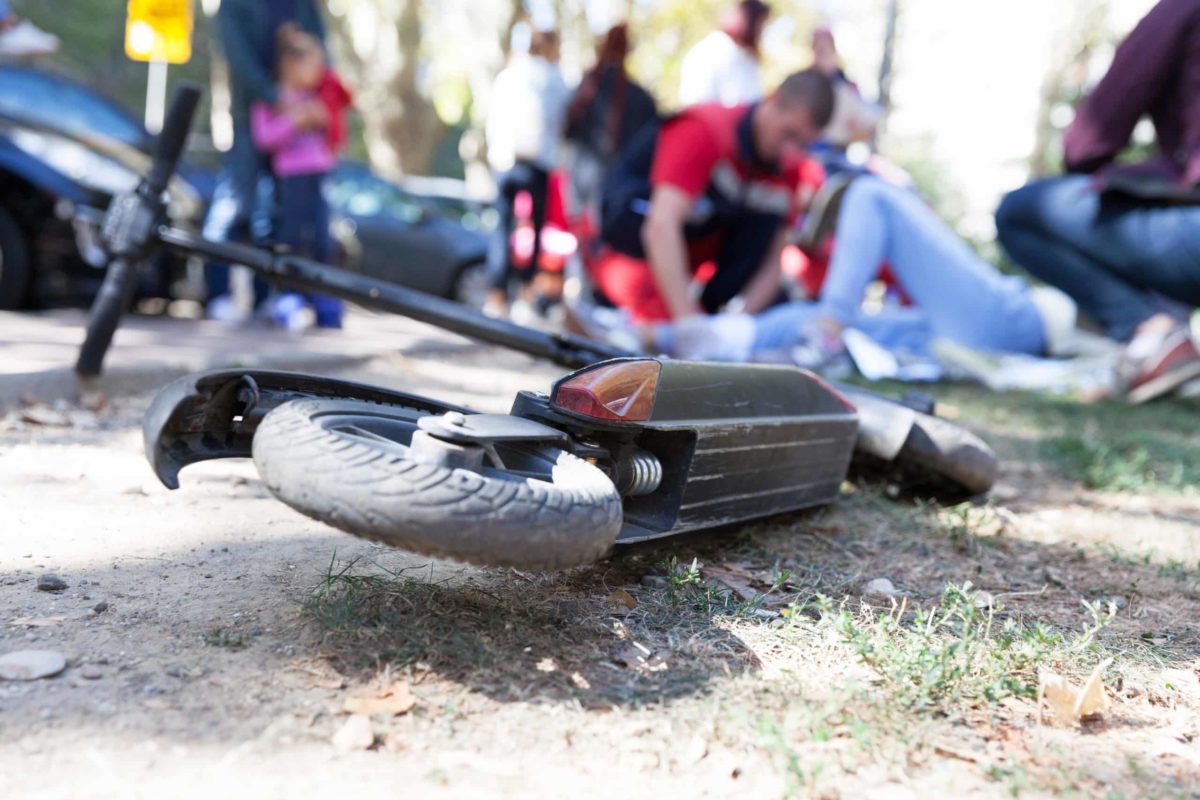
A witness can see in seconds what an insurance company will later try to cast doubt on for weeks: who had the green light, which car invaded the lane, or whether the other driver was distracted. Knowing how to request witnesses after a collision can protect your version of events when you are injured, nervous, and surrounded by pressure. It is not about arguing or convincing anyone. It is about getting clear information before those people leave.
After an accident, your priority is always safety and receiving medical attention. But if you can do so without putting yourself at risk, identifying those who saw the impact is one of the most useful decisions you can make. Do not wait for the police or insurance to resolve everything for you.
First: protect your safety before speaking with witnesses
If someone is seriously injured, there is fire, dangerous traffic, or risk of another impact, leave the area and call 911. Do not cross a roadway with traffic to pursue a witness and do not delay medical attention to collect information. No statement is worth more than your life or your health.
When it is safe, try to move the vehicle only if authorities direct you to or if blocking the road creates an immediate danger. Take photos of the position of the cars, the damage, the signs, the traffic lights, the roadway, the debris, and any visible injuries. Those images help establish what a witness later says.
Also call the police even if the other driver insists that "you can work it out between yourselves." A police report does not by itself decide who is at fault, but it can document witness information and the conditions of the location. If an officer does not respond, ask how to file an official report in accordance with your state's rules.
How to request witnesses after a collision without creating conflict
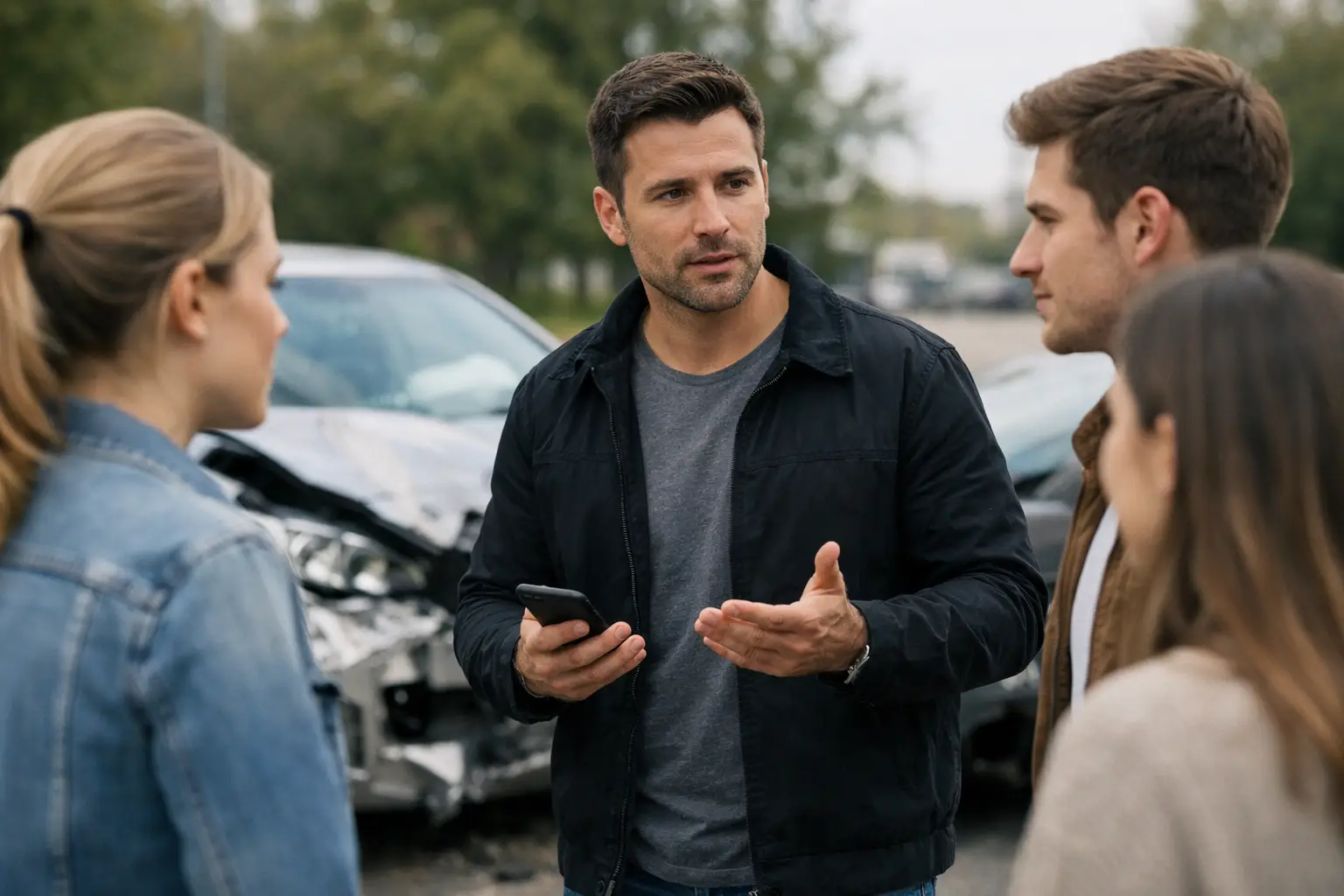
Approach calmly, introduce yourself, and briefly explain that you just had an accident. Do not ask them to take sides or tell them what they should have seen. A simple request usually works better: "Hello, did you see what happened? Could you give me your name and number in case insurance or police need to confirm what you saw?"
The key is to ask for information, not a prepared statement. An independent witness has more credibility when relating the facts in their own words. If the person wants to talk, listen and take notes. If they do not want to get involved, thank them for their time and do not insist. Pressuring, arguing, or pursuing someone can hurt you and escalate the situation.
Do not assume that a friend or family member who traveled with you will be enough. Their testimony may be valid, but the insurance company will likely try to present it as biased. That is why a pedestrian, a driver who was behind, a delivery person, or someone who was in a nearby business can provide a particularly valuable perspective.
What information to ask each witness
Ask for their full name, phone number, and email address if they are willing to provide it. Also note where they were when they saw the accident, what direction they were facing, and what they were able to observe. If they drive, you can ask if they had a dash camera, but do not demand that they give you the video at that moment.
If they agree, record a voice note or short video with their permission. It is enough for them to explain, naturally, what they saw: "I was waiting at the corner," "I saw the red car run the red light," or "the other vehicle changed lanes without signaling." State the date, approximate time, and location at the beginning of the recording.
You do not need to interrogate them. Avoid questions that suggest an answer, such as "The other driver was on their phone, right?" It is better to ask: "What did you see before the impact?" or "Were you able to see the light or the sign?" The more spontaneous and specific the statement, the more useful it can be.
If the witness is in a hurry or refuses to give their contact information
Many witnesses want to help, but they need to get to work, pick up their children, or are simply scared. Ask them at least to speak with the officer who arrives at the scene. Point them to the police and say: "Could you tell that officer what you saw before you leave?"
If the person leaves before you can speak with them, try to remember their description, the vehicle they were driving, the license plate, and the direction they went. Tell this to the police. Do not make up information or post accusations on social media looking for the witness. Wrong information can complicate your case.
What you should keep after obtaining their information
Save the contact information in more than one place. Take a photo of your notes, email them to yourself, or share the information with someone you trust. After a collision it is normal to forget details, especially if you are in pain or in shock.
Write a timeline as soon as possible: approximate time, weather, traffic, conversations with the other driver, police arrival, and names of witnesses. Do not alter your notes afterward to make them seem more favorable. An honest account of what you know and what you do not remember is much stronger than a forced story.
If there are nearby cameras, note the businesses, homes, or intersections where recordings might exist. Surveillance footage can be deleted in a matter of days. Do not enter private property or demand videos from staff. An accident attorney can request that such evidence be preserved before it disappears.
Mistakes that can give the insurance company an advantage
The biggest mistake is waiting. An insurance company may call quickly, but that does not mean you should give a recorded statement without understanding your rights or accepting an offer while you are still receiving treatment. Your injuries may seem minor on the first day and worsen later.
Also, do not share witness contacts with the adjuster without keeping a copy and without understanding the context of your claim. The company has its own interests. It may try to contact those people first, take a phrase out of context, or claim that the testimony is not conclusive.
Do not discuss fault at the accident scene. Saying "I'm sorry" out of politeness can be misinterpreted, and pointing a finger at the other driver does not substitute for evidence. Stick to the facts, exchange the required information, and let the report, photos, medical records, and testimonies speak for you.
Finally, do not post photos of the collision, comments about your pain, or arguments with the other driver on social media. The other party can review what you make public and try to use it against you. Preserve the evidence for your case, not for an internet argument.
When an attorney can step in to protect the evidence
A witness does not have to decide who wins the case. They may remember only part of the accident, and yet that part could be decisive. For example, they may not have seen the impact, but they did see the other driver looking at their phone, speeding in a school zone, or leaving a parking lot without stopping.
In California, Illinois, or Georgia, deadlines, liability rules, and the effect of comparative fault can vary. That is why it is important to review your case soon with a personal injury attorney, especially if there is an ambulance, lost work time, persistent pain, an uninsured driver, or conflicting accounts.
At Conexión Legal you can ask for guidance in Spanish so that a specialized attorney can evaluate the available evidence and act before videos, records, or witnesses are lost. Your immigration status does not take away your right to seek help after an accident. If you were injured, you deserve to know your options without paying upfront for a consultation.
If you are still at the accident scene, take a breath, get to safety, and seek medical attention. After that, ask for the name and contact information of anyone who saw what happened. That gesture of less than a minute can prevent your story from being reduced to the other party's version.