After a crash, it's easy to leave the scene in pain, fear, and with more questions than answers. But if you're looking for how to request a police accident report, you're on the right track: that document can become a key piece to prove what happened, identify the parties involved, and support your claim with the insurance company.
Don't put off this process until the insurance company asks for it. The sooner you locate the report, the sooner you can review the information, spot errors, and protect your version of the facts. An error in a license plate, a date, or the description of the accident can complicate things for you later on.
What is the police report and why it's worth requesting
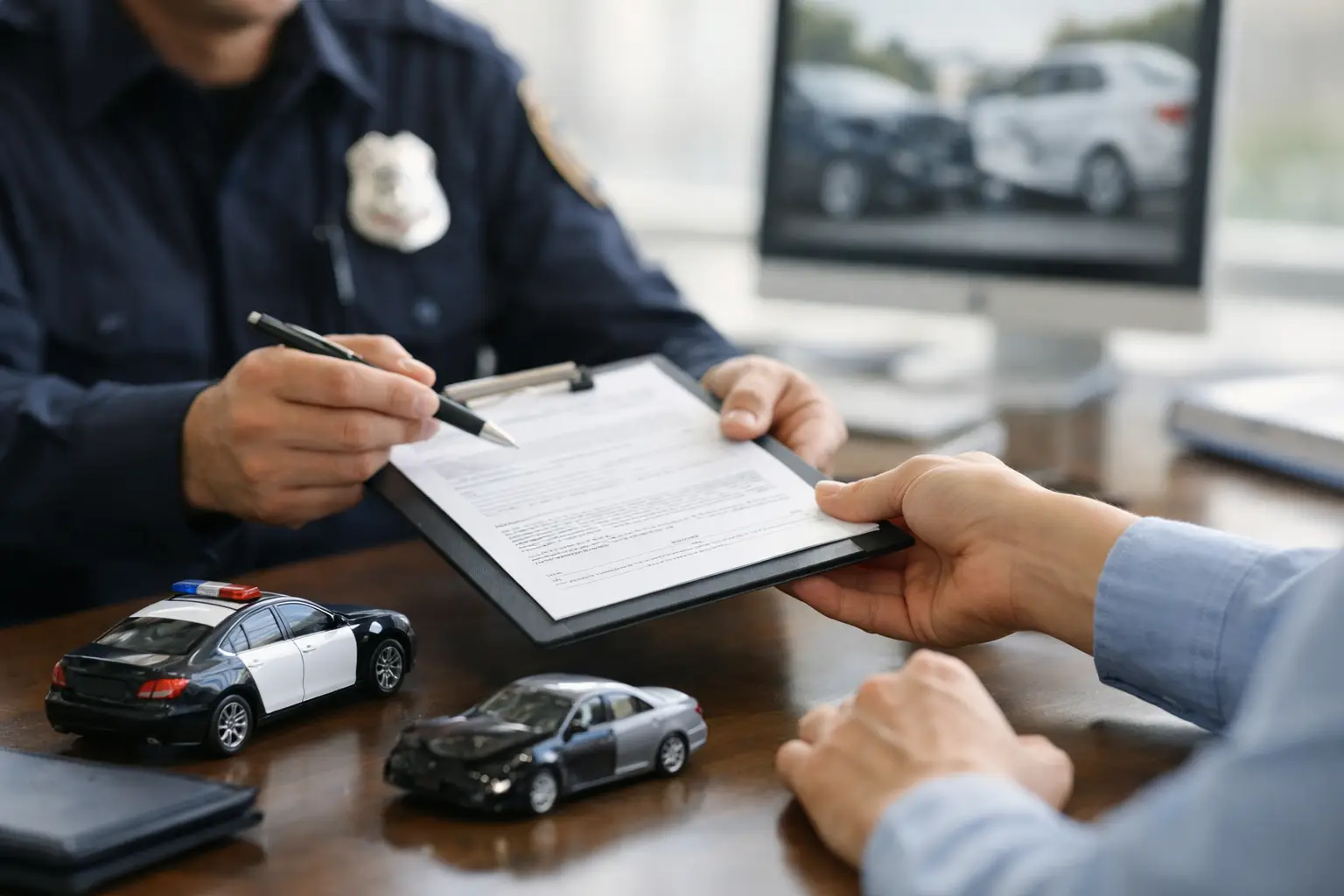
The police accident report, also called a collision report or traffic report, is the document prepared by the officer who responded to the scene. It typically includes the date, time, and location of the crash; the names and information of drivers, passengers, and witnesses; vehicle and insurance information; visible damage; initial statements; and, in some cases, a diagram of what happened.
It may also reflect whether a citation was issued, if there were apparent injuries, or if the officer believed someone violated a traffic rule. This doesn't mean the report automatically determines who is at fault or guarantees the outcome of a claim. The insurance company, lawyers, and, if necessary, a court will evaluate all the evidence. Still, the report is usually one of the first documents they review.
If you didn't call the police because the crash seemed minor, you may still have options. It will depend on the state, the city, and the severity of the incident. When there are injuries, significant damage, a hit-and-run driver, suspicion of alcohol or drugs, or a dispute over what happened, having police involvement is usually especially helpful.
How to request a police accident report step by step
The first piece of information you should look for is the report number or case number. It normally appears on the card, sheet, or receipt that the officer gives you at the scene. If you don't have that paper, it doesn't mean you've lost access to the document. You can locate it using other information.
Gather the information before calling or requesting it
Have your full name handy, the approximate date of the accident, the time, the street or intersection where it happened, and if you know it, the name of the agency that responded. It could be the municipal police, the county sheriff, or the state patrol. Also have your vehicle's license plate and your driver's license if you're going to make the request in person.
The more information you provide, the easier it will be for them to find the file. If you were a passenger, explain your relationship to the accident and provide the driver's name or case number, if you have it.
Identify the agency that prepared the report
The report isn't always requested from the police station closest to your home. You must request it from the authority that investigated the accident. If the crash occurred on a highway, a state agency may have responded. If it occurred within a city, it's typical that their police department handles it. In unincorporated areas, it might be handled by the county sheriff.
Check the document you were given at the scene, the calls you made to 911, or the notifications from your insurance company. If you still don't know which agency responded, call the non-emergency police number for the area where the crash happened and ask for guidance.
Choose the available method: internet, mail, or in-person service
Many agencies allow you to request and pay for a copy online through their records unit. Others require a form by mail or in-person pickup. Requirements vary by jurisdiction, and some platforms only provide the report to the involved parties, insurance companies, lawyers, or authorized representatives.
Don't be surprised if there's an administrative fee. It's usually small, but it varies by city or county. Keep your payment receipt and download a complete copy when it becomes available. If you request the report by phone, write down the name of the person who helped you, the date, and the instructions they gave you.
Respect the processing time
The officer doesn't always complete the report the same day. It can take several days and, in complex accidents, longer. Requesting it too soon may get you a response that the record isn't available yet. Ask when it's a good time to check again and don't assume the report doesn't exist just because it doesn't appear immediately.
If you have suffered injuries, don't wait to have the document to seek medical attention. Neck, back, head, or knee pain can appear hours after the collision. Your health comes first, and medical records also help document the real impact of the accident.
What to review when you receive the report
Read each page carefully. Check that your name, address, license plate, vehicle model, and insurance information are correct. Review the date, time, exact location, and identity of the other drivers. If there are witnesses, verify that their contact information is listed.
Pay special attention to the officer's narrative and diagram. Look for errors such as a wrong street, an incorrect direction of travel, or a description that fails to mention that the other driver ran a red light, was distracted, or hit you from behind. If the report mentions a citation or violation, keep that information, but remember it doesn't replace a complete investigation of liability.
Save the file in more than one place and keep a printed copy. Don't edit the document or make notes on the original. If you need to point something out to your lawyer, use a separate copy or write your observations on a separate sheet.
What to do if the report has errors or doesn't reflect what happened
Not all mistakes have the same solution. Administrative errors, such as an incorrectly written license plate or address, can sometimes be corrected by contacting the records division. Changing the officer's opinion or narrative is usually more difficult. Some agencies allow you to submit a supplemental statement or attach your version to the file, but they're not required to modify their conclusions.
Act quickly. Gather photos of the scene, images of the damage, videos, witness information, messages, and any evidence that contradicts incorrect information. Also write your own account while the details are still fresh: what you saw, where each vehicle came from, what the drivers said, and when you started feeling pain.
Avoid discussing the case with the other driver or posting details of the accident on social media. The insurance company may try to use isolated phrases to downplay your injuries or assign you some of the blame. Provide basic information to open the claim, but don't accept an offer or make a detailed statement without understanding how it could affect your case.
The police report is not the end of your claim
The insurance company may treat the report as a tool to close the matter quickly. You should see it as part of a larger file. Photographs, medical care, bills, lost wages, nearby cameras, and testimony can be equally relevant, especially if the report is incomplete or contains errors.
This matters even more when there was an ambulance, injuries that prevent you from working, an uninsured driver, a hit-and-run, or pressure from the company to accept money quickly. You don't have to face this process alone, and your immigration status does not eliminate your right to seek help after an accident.
At Conexión Legal we can help you connect with accident lawyers who serve in Spanish and understand the urgency of these cases. The consultation is free and you can receive guidance on the report, the insurance company, and next steps with no upfront payment.
Your police report may take a few days, but your protection shouldn't wait. Keep every piece of evidence, seek care if anything hurts, and get advice before signing or accepting an amount that may not cover everything the accident has taken from you.