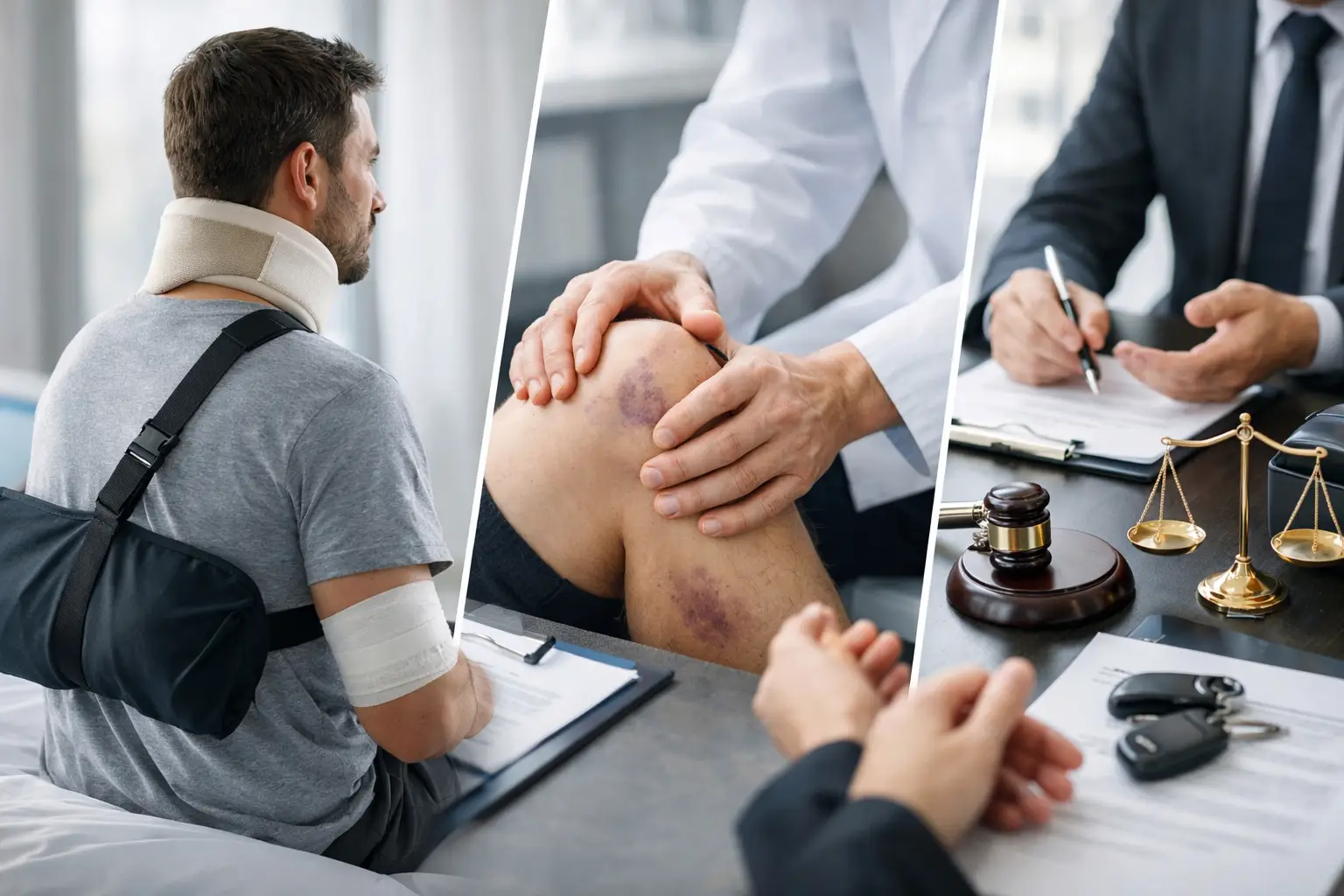
After a collision, fall, or workplace accident, pain does not always appear immediately. Sometimes it arrives hours later, when you have already told the insurance company that you were "fine" or have gone home without seeing a doctor. If you have suffered bodily injury, do not minimize what happened: an injury can affect your health, your salary, and your family's stability.
Insurance companies usually act quickly to close files with the smallest possible payment. You do not have to accept an incomplete version of what happened to you. Receiving medical care, keeping evidence, and seeking legal guidance as soon as possible can make a real difference in your claim.
What is considered bodily injury
Bodily injury is the physical injury that a person suffers due to the conduct, negligence, or liability of another party. In the United States, this concept appears frequently in claims for car accidents, hit-and-runs, falls in stores, workplace accidents, construction projects, and assaults.
It is not limited to a visible fracture. It can include neck and back injuries, concussions, cuts, burns, nerve damage, internal injuries, mobility problems, and chronic pain. There can also be consequences that are not visible to the naked eye, such as anxiety, sleep disorders, or the emotional impact of not being able to work or care for your children as before.
There is an important difference between bodily injury and property damage. The former refers to your injuries and their consequences. Property damage covers, for example, the repair or loss of a vehicle, work tools, or other belongings. In many cases, both claims go together, but your health should not take a back seat while your car or damaged property is being discussed.
Bodily injury can be worth more than it appears
A seemingly minor injury can become a serious problem. A whiplash impact can cause persistent neck pain; a fall can worsen a previous injury; an injury to the hand can prevent a construction worker, cook, cleaner, or warehouse worker from doing their job.
Compensation for bodily injury can cover present and future medical expenses, rehabilitation, medications, lost wages, reduced work capacity, and pain and suffering. The amount depends on the specific facts: severity of the injury, treatment needed, medical evidence, each party's liability, insurance coverage, and the laws of the state where the accident occurred.
That is why it is not advisable to calculate the value of a case by only looking at the first hospital bill. If your doctor indicates therapy, surgery, rest, or specialized follow-up, those documents help prove that the accident was not just a scare. Your case may have significant financial consequences, but it needs evidence and an appropriate legal strategy.
What to do from day one
Your priority is to receive medical care. If you have pain, dizziness, tingling, difficulty breathing, severe headache, or any concerning symptom, call emergency services or go to a medical center. Do not wait for the pain to become unbearable before documenting your injuries.
After that, try to document everything. Take photos of the location, vehicles, the hazard that caused the fall, and visible injuries. Keep medical reports, prescriptions, invoices, transportation receipts, sick leave forms, and messages with your employer or insurance company. If there were witnesses, note their names and contact information.
It is also helpful to write, in your own words, how the accident happened and how you feel in the days after. Memory becomes less accurate over time. A simple record of pain, medical appointments, lost work days, and daily limitations can be useful for explaining the real impact of the injury.
Do not post details of the accident or your recovery on social media. A photo taken out of context can be used to question your injuries. And avoid signing broad authorizations, accepting quick settlements, or giving recorded statements without understanding their effects. You can provide basic information, but you do not have to resolve the claim on your own while you are injured.
If the insurance company calls, do not pressure yourself
It is common for the insurance company to contact you soon, even before you know the complete diagnosis. It may ask for a statement, access to your medical history, or propose an amount to "resolve" the matter. Its objective is to protect its interests, not yours.
Speaking with an insurance company does not mean you have to accept its offer. Once you sign an agreement, you typically waive the right to claim more money for those same injuries, even if you need additional treatment later. If you still do not know the extent of your bodily injury, closing the case too soon can leave you without resources when you need them most.
A personal injury attorney can review the evidence, identify responsible parties, communicate with insurance companies, and calculate the damages you should claim. Not all cases go to trial, but preparing a claim seriously from the start improves your position to negotiate.
Your immigration status does not take away your right to seek help
Many Hispanic families delay seeking help due to fear, misinformation, or because they believe their immigration status prevents them from claiming. Having suffered an injury due to someone else's negligence does not disappear because of your nationality, language, or immigration status.
Each case has its own details and the rules change depending on the state, but you deserve to receive clear information in Spanish and to be treated with respect. If the accident occurred in California, Illinois, or Georgia, it is especially important to consult soon: legal deadlines may limit the time available to claim.
In workplace accidents there is also a relevant difference. There may be a workers' compensation claim against the employer's insurance and, in certain circumstances, an additional claim against a third party responsible, such as a driver, contractor, or manufacturer of a defective tool. Do not assume that you only have one avenue for help.
When it is advisable to speak with an attorney
It is advisable to request a consultation as soon as possible if you need medical care, miss work, the other party denies liability, the insurance company questions your injuries, or offers you money quickly. Also if the accident involved a truck, a motorcycle, a company vehicle, a construction project, or a person without sufficient insurance.
You do not have to know legal terms to start. The essential thing is to explain what happened, where it occurred, what medical care you have received, and who was involved. A legal team can evaluate the case and connect you with an appropriate attorney based on the type of accident and area. In many personal injury cases, representation works with fees contingent on the outcome, although it is advisable to review the specific conditions of the agreement before signing.
Conexión Legal helps Spanish speakers find legal guidance in Spanish, with quick attention and no initial payment for the consultation. Do not complicate your life arguing alone with an insurance company while you try to recover.
Do not let pain turn into silence
An accident can change your routine in seconds, but you do not have to bear its consequences without support. Take care of your health, keep every piece of evidence, and seek advice before making decisions that close off your options. Asking for help in time is a way to protect your family and defend the true value of your bodily injury.