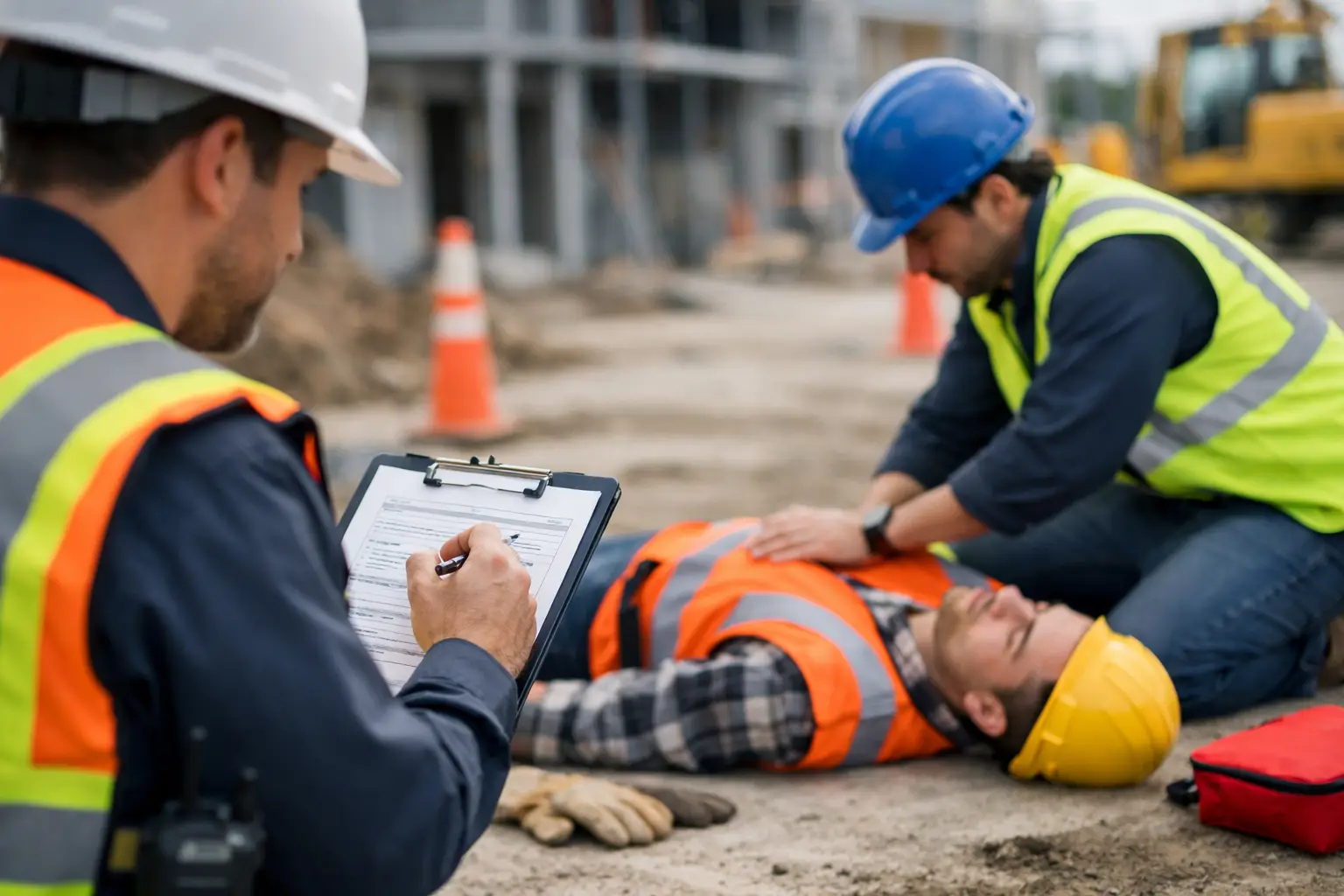
A construction accident doesn't leave time to think calmly. There's noise, pressure, supervisors asking questions, coworkers moving around, and often, pain. That's why understanding how to report a construction accident correctly can make the difference between protecting your rights or being left with medical bills, lost work days, and a version of events that doesn't favor you.
Here's the first thing: reporting is not just "notifying." Reporting well means creating a record, seeking medical attention, identifying witnesses, and preventing the company or insurer from controlling the entire story from the first minute. If you were injured on a construction site in the United States, acting quickly matters.
How to report a construction accident correctly from the very beginning
If the injury is serious, your health is the absolute priority. Ask for help immediately and seek urgent medical attention. If you can speak, explain clearly that the accident occurred at work, on a construction site, and indicate what you were doing and what part of your body was injured.
Next, report the accident to your supervisor, foreman, or person in charge of the work site as soon as possible. Do it the same day if your condition allows. In many cases, waiting seems like a good idea because of fear of retaliation or because you think "it will go away tomorrow." That delay can complicate things greatly. The company could say it didn't happen there, that it wasn't that serious, or that your injury came from somewhere else.
When you make the report, try to get it in writing. If they allow it, fill out a form. If they don't give you one, send a text message, email, or any communication that records the date, time, place, and a brief description of what happened. Something as simple as "I was injured today on the work site when I fell from a ladder near the loading area" already creates a useful record.
Don't embellish the story or minimize what happened. Don't accept prepared phrases if they don't reflect the truth. If you hit your back, neck, and leg, say so. If a machine failed or safety equipment was missing, say that too.
What information should the report include
A good report doesn't need complicated legal language. It needs accuracy. Include when the accident occurred, what part of the work site, what task you were performing, how the incident happened, and what symptoms you had at that moment.
It's also helpful to note if there were visible dangerous conditions. For example, unstable scaffolding, defective tools, materials placed incorrectly, missing harness, slippery floor, poor lighting, or unsafe instructions. In construction, many injuries don't happen by "bad luck," but because of risks that could have been prevented.
If there were witnesses, keep their names and contact information. This can be very valuable later, especially if the employer changes their version. The same applies if the accident was captured by cameras or if there was any record of entry, exit, or task assignment that day.
The most common mistake: trusting that the company "will take care of it"
Here many people lose time and weaken their case without realizing it. The supervisor says they'll do the report later, that you should rest first, that nothing's wrong, or that you should go home and they'll talk later. It sounds kind, but it doesn't always protect you.
On a construction site, multiple companies can be involved at once: general contractor, subcontractors, safety company, site owner, or equipment supplier. That means responsibility isn't always as simple as it seems. If you leave everything in others' hands, you risk important details disappearing.
That's why it's good to keep your own evidence. Take photos of the area, the tool, the scaffolding, the fallen material, or any condition that contributed. If your injuries are visible, document that too. Do it as soon as possible, because a work site changes quickly and what's wrong today may be moved, cleaned, or repaired tomorrow.
Medical attention: don't delay it or minimize it
Many construction injuries worsen over hours. A head blow, back pain, fall, crushing, deep cut, or shoulder injury may seem manageable at first and become serious later. Seeking medical attention not only protects your health. It also creates a professional record that you were injured and how it happened.
When you see a doctor, be clear and direct. Explain that it was a work accident on a construction site. Describe all symptoms, even ones that seem minor. If you hide something out of fear or rush, later the insurer can say that injury has no connection to the accident.
Don't miss appointments or abandon treatment without medical guidance. Sometimes a person returns to work too soon out of financial necessity. It's understandable, but it can affect both your recovery and any future claim.
If you're an immigrant, your right to report still exists
Many Hispanic workers don't report out of fear. Fear of losing the job, getting into trouble, or having their immigration status used against them. That fear is real, but so is your right to seek help for an injury suffered at work.
In the United States, labor protections and injury claims don't automatically disappear based on immigration status. Each case has its own details, of course, but staying silent out of fear only benefits those wanting to avoid responsibility. If you were injured, don't complicate your life trying to resolve it alone.
Speaking with a construction accident attorney can help you understand what options you have, what deadlines apply, and if in addition to workers' compensation there is a possible claim against third parties. On certain job sites, that difference matters a lot.
When the case can go beyond the work report
Not all construction accidents are limited to a workers' compensation process. Sometimes a company other than your direct employer is involved, a machinery manufacturer, an outside contractor, or the property owner. If a ladder was defective, if a crane failed, if a third party created a dangerous condition, or if there were serious safety violations, there may be more than one legal path.
That's why it's not wise to sign documents hastily or give recorded statements without understanding what they'll be used for. What seems like a simple "procedure" can end up affecting your claim. Here the detail matters: who was in charge, who supplied the equipment, who was supervising, who ignored the risk.
What not to do after reporting the accident
After reporting, stay calm, but don't let your guard down. Don't change your story to please anyone. Don't say you're fine if you're not. Don't post details of the accident on social media as if it were just another anecdote.
Don't assume that because you kept working for a few hours or days, there's no case anymore. In construction, many people continue out of necessity and later discover more serious injuries. That doesn't automatically mean you lost your rights, although it can make the situation more disputed.
Keep copies of everything: messages, reports, prescriptions, diagnoses, medical restrictions, bills, photos, and witness names. If your employer retaliates, reduces your hours, or pressures you not to move forward, document that too.
How to report a construction accident correctly without being left unprotected
The correct way combines speed and care. Report promptly, but with clear information. Seek medical treatment, but stating exactly that it was a work site accident. Keep evidence, even if you're promised that "everything is under control." And before trusting the company's or insurer's version, consult a professional who defends your interests.
Conexión Legal helps Hispanic people find legal support in Spanish with no upfront cost and quick attention—something crucial when the accident leaves you without answers and without time. If the injury was serious, if there was a fall, machinery, electrocution, falling objects, or any unsafe condition, moving quickly can change the course of the case.
The reality is simple: after a construction accident, every hour counts. Not just because of the pain or lost work, but because evidence moves, memories change, and others start building a story that may not be yours. Protecting yourself starts with reporting well and asking for help in time.