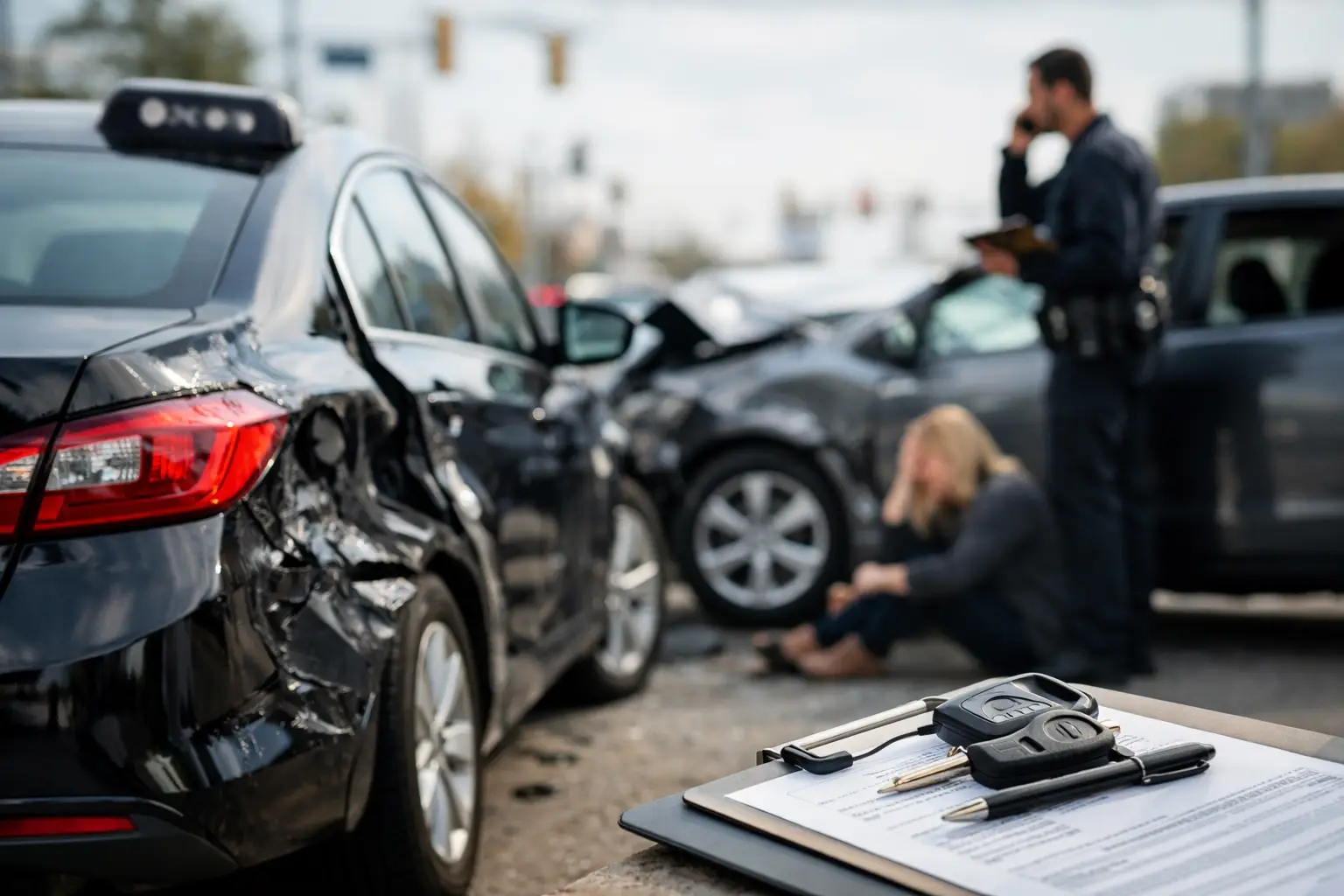
An Uber crash leaves you in pain, with questions and a lot of pressure. This guide for an Uber accident is designed to help you react calmly, protect your health, and not give away your rights to the insurance company by not knowing what to do in the first few hours.
When an accident happens during an Uber trip, it's not always clear who pays. It could be the Uber driver, another vehicle, multiple policies at once, or an insurance company trying to blame someone else. That's where many people lose time, money, and evidence without realizing it. First, you need to understand that even though you were a passenger, you can still have a case.
Guide for an Uber accident: what to do at the moment
If you are injured, the first thing is to ask for medical help. Call 911 if there is severe pain, bleeding, dizziness, difficulty moving, or any sign of injury. Even if you think you can endure it, don't downplay the symptoms. There are neck, back, or head injuries that appear hours later.
After that, if your condition allows it, document everything. Take photos of the cars, license plate, the scene of the accident, the damage, visible injuries, and any nearby traffic signs. Save screenshots of the trip in the app, the driver's name, the time, the route, and the receipt. In an Uber accident, those details are very important because they prove that the trip was active.
It's also a good idea to ask for the information of all people involved. Not just the Uber driver, but the other driver if there is one, witnesses, and police officers who arrive at the scene. If the police make a report, ask for the report number. That document can carry a lot of weight later.
Don't discuss who was at fault. Don't apologize reflexively or make comments like "I'm fine" if you don't know. Insurance companies use phrases like that to reduce the value of the case. Stick to providing basic information and seeking medical attention as soon as possible.
Who can claim after an Uber accident
You don't have to be a driver to have rights. An injured passenger almost always has grounds to claim, because they usually didn't cause the accident. There can also be a claim if you were a driver of another car, a pedestrian, a cyclist, or even the Uber driver themselves, although in that case the analysis changes.
If you were a passenger, your situation is usually more straightforward. The main discussion is not whether you were in the vehicle, but what coverage applies and which insurance it's best to file a claim against. If you were an occupant of another car, a pedestrian, or a courier on the road, the at-fault driver's policy and, in certain cases, Uber's coverage may come into play.
What changes everything is the exact moment of the accident. It's not the same whether the driver had the app off, was waiting for a trip, or already had a passenger inside. That detail defines what policy could respond.
What insurance applies in an Uber accident
This is where the case gets complicated. Uber doesn't function like a traditional taxi and coverage depends on the phase of the trip. If the driver wasn't connected to the app, their personal insurance usually applies. If they were connected and waiting for a request, there may be different coverage. If they were already picking up a passenger or the trip was underway, the protection may be greater.
That doesn't mean they'll pay without a fight. Insurance companies review the police report, app records, statements, medical history, and even how long it took you to seek care. If they find gaps, they'll try to pay less or deny parts of the damage.
That's why it's not enough to know that "there is insurance." What matters is proving what coverage applies and presenting the case in an organized way from the beginning. A small mistake, like not keeping screenshots of the trip or delaying a visit to the doctor, can open the door to unnecessary disputes.
The mistakes that hurt your case the most
The first mistake is not going to the doctor quickly. Many people endure it because they don't want to miss work or because they're afraid of the bill. But if there's no early medical attention, later the insurance company can say the injury wasn't caused by the accident or that it wasn't serious.
The second mistake is talking too much with the insurance company. Sometimes they call the same day with a friendly tone and questions that seem simple. They want you to give a recorded statement, downplay your pain, or accept a quick amount before knowing what the injury really costs.
The third mistake is relying solely on the app report. Reporting the crash within Uber helps, but it doesn't replace evidence, medical attention, or legal advice. It's also not a good idea to post about the accident on social media. A photo smiling at a family gathering can end up being used to attack your credibility.
Another common mistake is thinking that, because you don't have documents or speak little English, you can't claim. That's not true. Your immigration status does not eliminate your rights after an injury in the United States.
What compensation can be claimed
Each case depends on the severity of the injury, who was at fault, and what policies exist. Still, there are damages that are frequently claimed. These include medical expenses, rehabilitation, lost wages, physical pain, limitations in daily life, and, in some cases, future treatment.
If the injury prevents you from returning to the same job, the economic impact may be greater. The same applies when there are surgeries, permanent damage, anxiety about driving, or need for ongoing support at home. An Uber accident case is not valued only by the repair of the car, but by how it changed your life after the crash.
It's important to be careful here. Accepting a quick offer can seem like a relief when you have bills piling up, but many injuries develop over time. What today seems like a strong blow can become months of therapy or chronic pain.
What happens if the Uber driver was not at fault
This happens much more often than people think. Maybe another car ran a red light, was distracted, or hit the vehicle you were in as a passenger. In that scenario, your claim can be directed against the at-fault driver, and there may also be additional analysis of supplemental coverage.
As a passenger, normally you won't be assigned fault. But that doesn't prevent insurance companies from fighting each other to delay payments. One says it's the other's responsibility, the other asks for more documents, and meanwhile you're still in pain and without receiving lost wages. That's why you need to move the case quickly and with clear evidence.
When to talk to a lawyer
If there was an injury, the short answer is: as soon as possible. You don't need to wait for the insurance company to deny the case or for the pain to get worse. The sooner a lawyer receives the information, the easier it will be to preserve evidence, request records correctly, and avoid mistakes that later cost dearly.
This is especially important if there was hospitalization, fracture, neck or spine injury, time off work, multiple policies involved, or conflicting versions of the crash. Also if the insurance company pressures you to record a statement or sign documents you don't understand.
For many Hispanic families, the main fear is not just the accident. It's not knowing who to call, how to explain what happened, and whether they'll be able to pay for legal help. That's where having Spanish-language assistance and immediate guidance makes a difference. Platforms like Conexión Legal help quickly connect injured people with accident lawyers in the United States, with no upfront payment in cases handled on contingency.
Guide for an Uber accident if you're Hispanic in the U.S.
If you're Hispanic and just went through an accident, don't complicate your life trying to figure out the system on your own. Keep evidence, seek medical attention, don't give recorded statements without consulting someone, and act fast. The urgent thing is not to discuss on the phone with the insurance company, but to protect your health and your case.
Don't let fear paralyze you either. Many people delay calling because of their immigration status, distrust, or because they think the process will be too complicated. The reality is that waiting usually benefits the insurance company, not you.
After a crash, every hour counts. If there was pain, medical expenses, or days without working, it's worth reviewing the case with someone who knows how Uber accidents work in your state. Asking for help on time is not an exaggeration. It's defending yourself when you need it most.