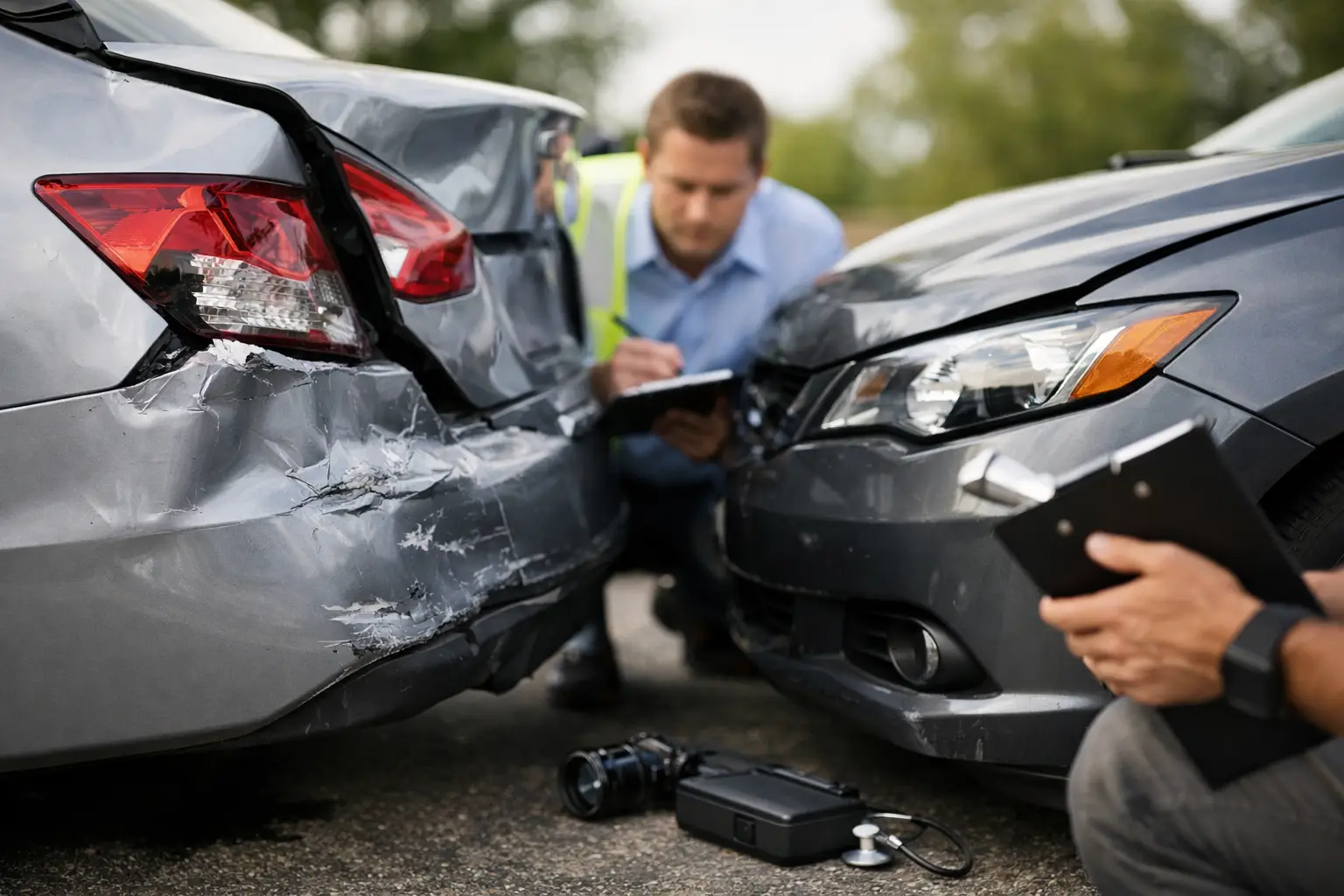
A rear-end collision may seem straightforward: another driver hits your vehicle from behind and fault appears obvious. But essential evidence in a rear-end collision can make an enormous difference when the insurance company tries to dispute the severity of your injuries, claim you braked without reason, or reduce the value of your claim. Don't let an incomplete version of the facts leave you with medical bills, pain, and lost income.
After the impact, you may initially only feel shock or stiffness in your neck. Many injuries to the back, shoulder, head, or soft tissue appear hours or days later. Your priority is to receive medical attention and document what happened. Afterward, it's wise to protect evidence before it disappears.
Essential evidence in a rear-end collision
The strongest evidence is not always a single photograph or a single statement. It is the collection of documents, images, and testimonies that connects four points: how the accident occurred, who had the duty to prevent it, what damage the vehicles suffered, and how the impact affected your health and daily life.
The police report and the other driver's information
Call 911 when there are injuries, significant damage, disagreement about what happened, or any risk on the road. The police report may include the date, time, location, driver information, witnesses, and the officer's observations. It does not decide the case by itself, but it can be an important piece to reconstruct the facts.
Ask for the report number before you leave and note the officer's name or badge number if you can do so without putting yourself in danger. Also exchange information with the other driver: name, phone, license plate, insurance company, and policy number. You don't need to discuss or accept blame at the scene. Limit yourself to explaining concrete facts.
If the other driver leaves, don't chase them. Try to remember the license plate, the model, color, and the direction they went, and report that information to the police. An impulsive decision could expose you to a second accident.
Photos, videos, and visible damage
Images taken right after the collision can answer questions that will later be disputed. Photograph the rear damage to your car and the front of the vehicle that hit you. Include wide shots of the road, lanes, traffic lights, signs, road conditions, and distance between the vehicles.
Also take pictures of debris on the ground, skid marks, broken pieces, and any visible injuries. A short video walking through the scene can show details that a single photo does not capture. If your vehicle had to be towed, keep the towing documentation and take images before the car is repaired or declared a total loss.
Don't edit the photos or delete the original files. Save a copy in the cloud or send it to a trusted person. The date and file data can help confirm when the evidence was recorded.
Independent witnesses and nearby cameras
A witness who does not know either party can be very valuable, especially when the other driver denies following too closely, looking at their phone, or braking late. Ask for name, phone, and email. If they agree, briefly note what they saw while the memory is fresh.
Look around: shops, gas stations, homes, buses, and intersections may have cameras. Many recordings are erased within a few days. Don't assume that the police or insurance company will preserve them for you. Notify your attorney as soon as possible of the existence of those cameras so they can request the material be preserved.
Dashboard cameras, navigation records, and apps that detect sudden movements can also provide information. Don't share complete recordings with the insurance company without first understanding what they show and how they could be interpreted.
Medical evidence cannot wait
In a rear-end collision, insurance companies typically question injuries that are not visible to the naked eye. That's why seeking medical evaluation soon is not exaggerating: it's taking care of your body and documenting the relationship between the impact and your symptoms.
Tell the healthcare professional all your symptoms, even if they seem minor: neck pain, tingling, dizziness, headache, difficulty concentrating, lower back pain, driving anxiety, or difficulty sleeping. If you omit a symptom thinking it will go away on its own, it can later be harder to prove when it started.
Keep emergency reports, X-rays, prescriptions, referrals, physical therapy sessions, bills, and work restrictions. Follow the treatment plan indicated. Skipping appointments without explanation can give the insurance company an argument to claim that the injury was not that serious or that it worsened due to lack of care.
This does not mean that everyone needs the same treatment. The severity of a rear-end collision depends on speed, vehicle positioning, seatbelt use, prior injuries, and other circumstances. A personal injury attorney can review the case without ever substituting your doctor's judgment.
Your pain diary and daily losses
There are damages that don't appear in a photo of the car. Keep a simple record from the first day: pain level, medications, activities you can no longer do, sleepless nights, help you need at home, and days of work lost.
For someone who drives for work, carries materials, cares for children, or spends many hours on their feet, a neck or back injury can completely change the routine. Note the dates and keep pay stubs, messages from your supervisor, sick leave receipts, and any proof of lost income. You are not obligated to bear alone the economic consequences of another person's negligence.
Mistakes that can weaken your claim
The insurance company's first call may come when you're still confused or in pain. Their goal is to obtain information and close the matter quickly. Speaking politely does not mean accepting a recorded statement or signing a broad medical authorization without legal advice.
Avoid posting details, photos, or comments about the accident on social media. An apparently innocent image can be taken out of context. Also don't hand over the car for repair without having documented the damage well and consulted on how to preserve the evidence you need.
Be careful with phrases like "I'm fine" at the accident scene. It's normal not to feel all symptoms yet. You can say that you need a medical evaluation before knowing the extent of any injury. And although rear-end collisions usually point to the responsibility of the rear driver, there are exceptions: an unexpected maneuver, a breakdown, a chain of impacts, or a dispute over lanes can change the analysis.
When to talk to an accident attorney
It's wise to seek help as soon as possible if you have injuries, miss work, the other driver denies responsibility, the insurance company pressures you, or the accident involved multiple cars. An attorney can review the report, protect recordings, organize medical documents, and respond to the insurance company so you don't have to face that process alone.
In California, Illinois, and Georgia, the deadlines and applicable rules may vary depending on the location and circumstances of the accident. Waiting too long can make it harder to locate witnesses or preserve videos. Your immigration status does not eliminate your right to seek legal help for an injury caused by another person.
Conexión Legal can help you find accident attorneys who serve in Spanish and understand the concerns that arise after a collision. A consultation can help you understand your options, without having to navigate alone through calls, paperwork, and bills while you recover.
Keep every piece of evidence, listen to your body, and seek guidance before accepting a quick offer. After a rear-end collision, acting calmly but without delay is a real way to protect yourself and your family.