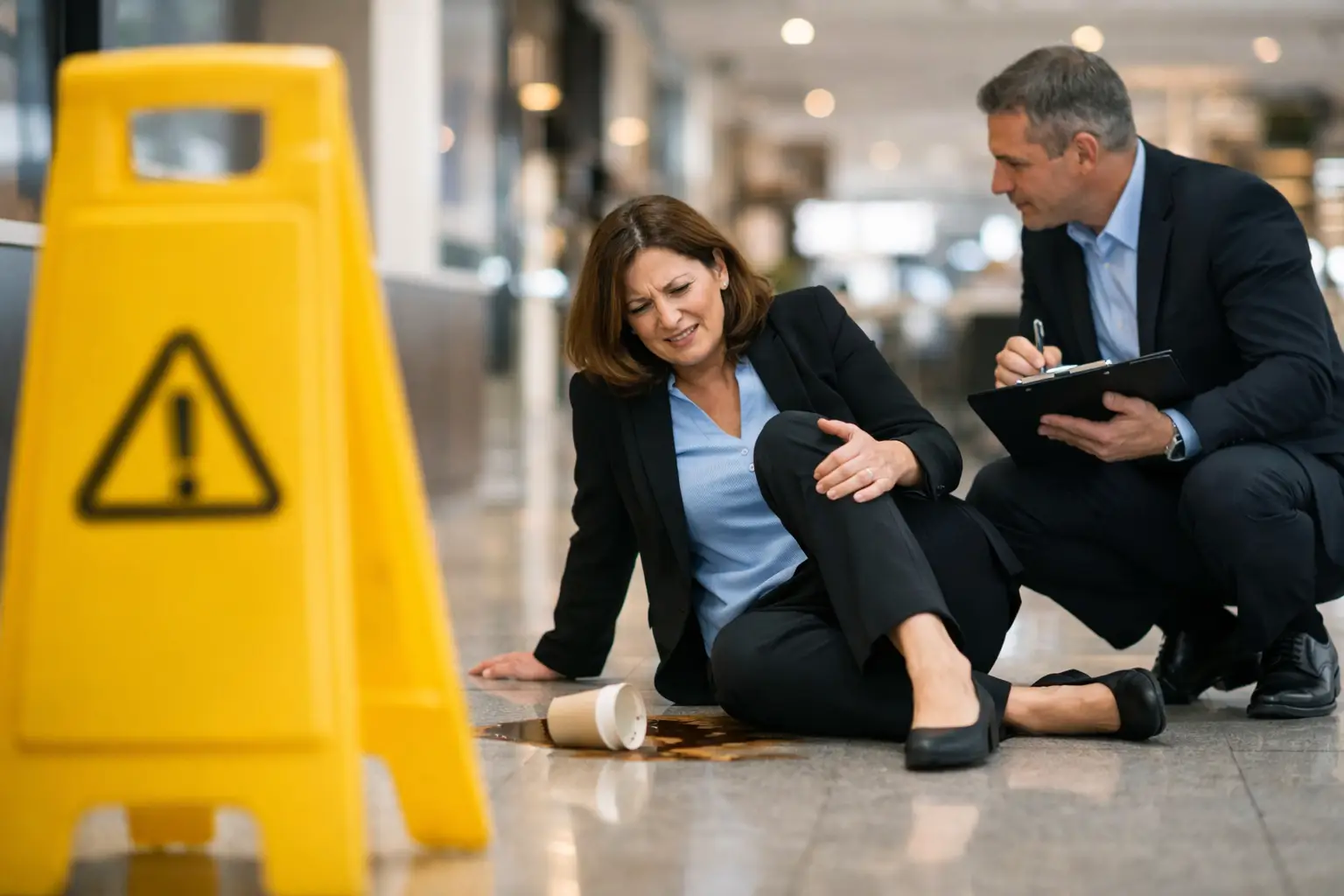
A slip and fall lawsuit at a business can start with something that seems small: an unmarked wet floor, an entrance full of water, a raised carpet, or a hallway with merchandise on the ground. But a fall can cause fractures, back injuries, knee damage, neck pain, or even a disability that prevents you from working. If you were injured in a store, restaurant, supermarket, shopping center, or any other establishment, don't assume it was just bad luck.
The business has an obligation to keep its facilities reasonably safe for customers and visitors. When it knew, or should have known, that a hazard existed and failed to act promptly, it may be responsible for the damages. Don't let an insurance company make you feel guilty or accept quick money without knowing the real extent of your injury.
When a slip and fall lawsuit at a business may exist
Not every fall automatically gives rise to a claim, but you also don't need to prove that the owner wanted you to get hurt. The central question is usually whether the business was negligent. That is, whether it left a dangerous condition unrepaired, uncleaned, isolated, or inadequately warned about.
For example, there may be grounds to claim if an employee mopped the floor and did not place visible signs, if there was a spill for enough time for staff to detect it, or if a broken tile had been creating a risk for days. Poor lighting, unmaintained stairs, loose railings, cables crossing a walkway, or poorly stacked products may also be relevant.
Time matters. If someone spilled a drink seconds before your fall, the business can argue that it had no reasonable opportunity to clean the area. If cameras show that the spill was there for half an hour and no one did anything, the situation changes. That's why evidence can make the difference between a weak claim and a solid case.
What to do right after the fall
Your health comes first. Even if you get up and think you can keep walking, some injuries appear or worsen hours later. Seek medical attention as soon as possible and explain exactly how the fall occurred, what part of your body you hit, and what symptoms you feel. That medical record connects the injury to the accident.
Afterward, report the incident to a manager and ask them to prepare a report. Don't accept them minimizing what happened with phrases like "I'm sure it was nothing" or "the floor was fine." Request a copy of the report if possible, or write down the name of the person who prepared it, the time, and the exact location.
If you can do so without risking your health, take photos and videos of the area. Photograph the puddle, the lack of signage, the broken floor, the lighting, your wet clothes, or any detail that explains why you fell. Also keep the shoes and clothes you were wearing. Don't clean them or throw them away: they could serve as evidence.
If there were witnesses, ask for their name and phone number. Many people leave quickly, but their account can confirm that a hazard existed or that staff knew about the problem. It's also good to note if you saw security cameras. These recordings can be erased or overwritten in just a few days, so you need to act without delay.
Evidence that can strengthen your claim
A slip and fall injury at a business is not won just by saying you fell. You have to prove what condition caused the fall, who was responsible, and what losses it caused you. A personal injury lawyer can investigate cleaning records, internal reports, surveillance images, and the history of similar incidents at the establishment.
The most useful evidence typically includes photographs of the hazard, video from cameras, accident reports, witness statements, and medical documentation. Treatment receipts, rehabilitation bills, prescriptions, travel receipts, and proof of lost work days are also important.
Don't post details of the accident on social media. An apparently innocent photo, an outing with friends, or an out-of-context comment can be used by the insurance company to question the severity of your injury. Protect your case and discuss the facts with your doctor and your legal representative.
The insurance company is not on your side
After a fall, it's common for the business's insurance company to call quickly. It may seem friendly and say that it only needs a statement to open the file. Be careful. What you say can be recorded, interpreted against you, or used to reduce compensation.
You are not obligated to accept the first offer or to sign documents you don't understand. A quick amount may seem helpful when there are medical bills and lost income, but it may not cover future appointments, physical therapy, surgery, or the pain that will continue to affect your life. Before speaking with the insurance company, ask for legal guidance in Spanish.
What compensation can be claimed
Each case is different and depends on the severity of the injury, the evidence, and the laws of the state where the accident occurred. However, a claim may include current and future medical expenses, lost wages, reduced capacity to work, physical pain, and emotional suffering.
If the injury forces you to miss work, you don't have to bear that loss alone. This especially affects hourly workers, those who support their families, and people who cannot afford to go without income. Your immigration status should not prevent you from seeking help after suffering an injury due to another's negligence.
In California, Illinois, and Georgia, timelines and rules about shared responsibility may vary. The business may try to say that you were looking at your phone, that you were wearing inappropriate footwear, or that you should have seen the danger. Even if they claim you were partly at fault, you might still have the right to claim depending on the circumstances. Don't dismiss your case without a professional reviewing it.
Don't wait for evidence to disappear
Cameras get erased, witnesses forget details, and businesses quickly repair the place where the accident occurred. The longer you wait, the harder it may be to prove what happened. Seeking medical attention soon also prevents the other side from saying that your injury occurred at another time.
Conexión Legal helps Spanish-speaking people connect with accident lawyers who understand the urgency of these cases. You can receive guidance in Spanish, with no upfront payment and with attention designed so you don't have to face a company or insurance company alone.
If you suffered a fall in a supermarket, store, restaurant, or shopping center, preserve the evidence and ask for help as soon as possible. Your injury deserves to be taken seriously, and defending your rights can give you the space you need to recover.