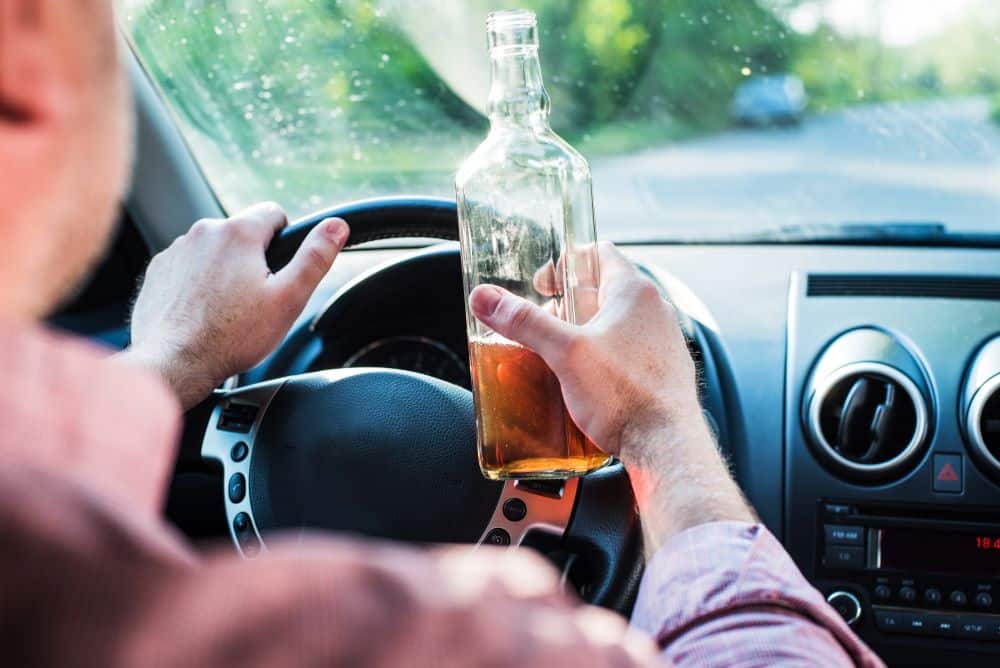
Having a car accident due to intoxication, also known as Driving Under Influence (DUI), is against the law in any state of the United States, so in these cases police officers and highway patrol can only stop vehicles of which they have a reasonable suspicion of being involved in criminal activities.
Officers may notice that the driver moves from one side to the other of the center line, changes lanes or drives erratically. However, when an accident occurs, the collision itself already generates sufficient reasonable suspicion that a law has been violated, so the officer can stop those involved in the accident and initiate an investigation.
If you have been involved in a car accident due to intoxication, you should contact Conexión Legal as soon as possible so that you can receive the best free legal advice, and in this way you can obtain guidance from a Hispanic attorney. Call us at 1800 201 1220 or write to us through WhatsApp to have the representation of a traffic attorney.An accident is sufficient reason for the officer to look inside the vehicle for evidence that the driver was intoxicated; the evidence must be visible to the naked eye, such as an open bottle of alcohol. The officer may also look at the driver's eyes and ask them questions in search of another indication that they were intoxicated.
This visual evidence gives the officer at the scene a reasonable suspicion that it was a car accident due to intoxication so they will be able to investigate the situation further and request a field sobriety test or a blood alcohol test.
When there is a suspicion that reasonable criminal activity has been carried out, after finding an open container of alcohol or seeing irregular driving behavior, police often administer a field sobriety test.
This procedure is generally triple and allows the officer at the scene to determine if the driver can balance at that moment, what their level of attention is and what physical abilities they have to drive the vehicle. When the driver fails the field sobriety test, they are often asked for a BAC test.Some states have laws that require drivers, passengers or pedestrians to undergo BAC tests when they are involved in a fatal accident. Other states leave it to the discretion of the commander at the scene. The so-called mandatory tests require that those who have suffered wrongful injury in a car accident submit to a BAC evaluation. On the other hand, in some states, discretionary tests allow doctors and other officials to determine whether one of these tests is necessary after a fatal accident.
Each state independently decides whether or not to use mandatory or discretionary tests as the case may be. For example, Texas uses discretionary tests that allow justices of the peace to order a BAC test on deceased drivers who appear to have been intoxicated. For its part, both New York and California use the necessary tests for pedestrians or drivers who have suffered fatal injuries. Some states, such as Florida and Virginia, do not have specific laws governing BAC tests.It is recommended that drivers involved in any type of car accident due to intoxication consult with a traffic attorney to see what options they have regardless of whether you were the driver in that state or not.Both defendants and victims of a drunk driving accident can benefit from legal advice. And even, you may be entitled to some type of economic compensation for damages and losses suffered as a result of the accident.
If required, you should immediately contact the Conexión Legal team so that you can receive the best free legal advice, as well as representation in court by a loyal, transparent traffic accident attorney who is always concerned about your rights.
Follow the steps of the following form to schedule your free consultation appointment.